

Nigeria
Policy statement
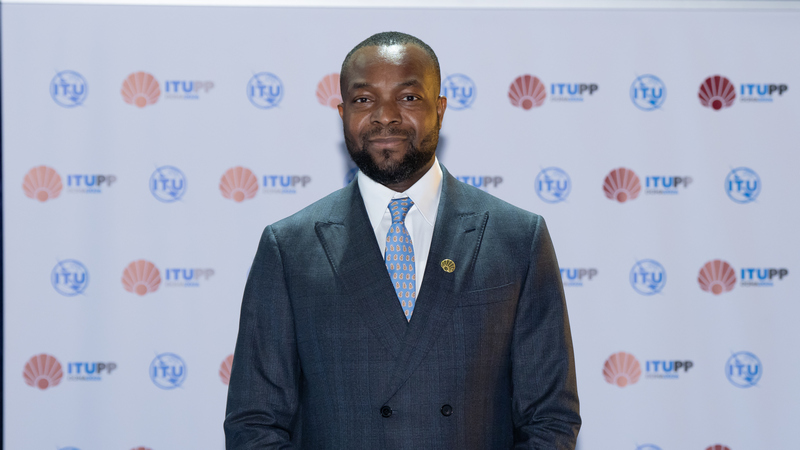
H.E. Dr Bosun Tijani
Minister
Federal Ministry of Communications, Innovation and Digital Economy
Mr President,
Your Excellencies, Distinguished Delegates
I thank the Government and people of the State of Qatar for their hospitality, and the ITU leadership and Secretariat for bringing us together.
Investment in digital infrastructure is an investment in who gets to participate in the economy.
For the roughly two billion people worldwide who are still offline, that investment can determine whether they can reach a market, access a public service or acquire a skill that opens up new opportunities.
Meaningful universal connectivity must therefore remain at the centre of the Union’s work for 2027–2030.
In Nigeria, we are investing in both a national backbone and the networks that reach underserved communities.
Our Project BRIDGE aims to deploy 90,000 kilometres of open-access fibre, extending connectivity to every part of Nigeria, across all 774 local government areas.
Through the National Universal Connectivity Project —NUCAP, we plan to deploy 3,700 rural telecommunications sites, with the aim of ensuring inclusion by bringing more than 20 million Nigerians who currently have no connectivity into the digital economy.
Mr President,
The choices we make today will determine how many people have those opportunities, and whether AI narrows or widens the digital divide.
That is why our National AI Strategy prioritizes building absorptive capacity, which is our ability to turn access to technology into broad-based gains in productivity and prosperity.
This depends on affordable connectivity, access to computing power, usable local data, people with the skills to apply AI in their own fields, and policies and institutions that support responsible adoption.
The more widely those capabilities are shared, the more widely the gains from AI can spread across the economy.
Our 3 Million Technical Talent programme, 3MTT, is central to that effort.
Building on the foundations of digital literacy, we are equipping 3 million Nigerians with technical skills they can apply in critical technology fields, including the skills to build and use AI.
However, for us to truly achieve collective and equitable growth in the use and adoption of AI, computing power remains a barrier for many countries, so Nigeria calls on the ITU, within its mandate, to lead international cooperation on shared compute infrastructure.
Distinguished Delegates,
As we connect more people, we must also protect them online.
The next two billion users must be able to participate with confidence, including children and people coming online for the first time.
This means strengthening digital literacy and protecting personal data.
Above all people must be able to count on their connections when disruption occurs.
Through the International Advisory Body for Submarine Cable Resilience, which I have had the privilege of co-chairing, governments and industry have advanced a shared agenda for more diverse cable routes, better preparedness and faster repairs.
These priorities show why Nigeria believes in One ITU.
The Union’s three Sectors must therefore plan and deliver together, working closely with regional partners such as the African Telecommunications Union.
Member States should also have a meaningful voice in setting those priorities and a clear view of the results the Union delivers.
In closing,
Nigeria has served this Union in many capacities since joining in 1961, including through the Council, the Digital Innovation Board and our work on child online protection and submarine cable resilience.
It has also been my privilege to chair the ITU Council this year.
Nigeria therefore seeks your support for its re-election to the ITU Council for the 2027–2030 term.
We stand ready to work with every region to extend meaningful connectivity, protect the people and networks that depend on it, and give every country a practical opportunity to shape the future of AI.
Thank you.
More statements
All PP-26 statements